
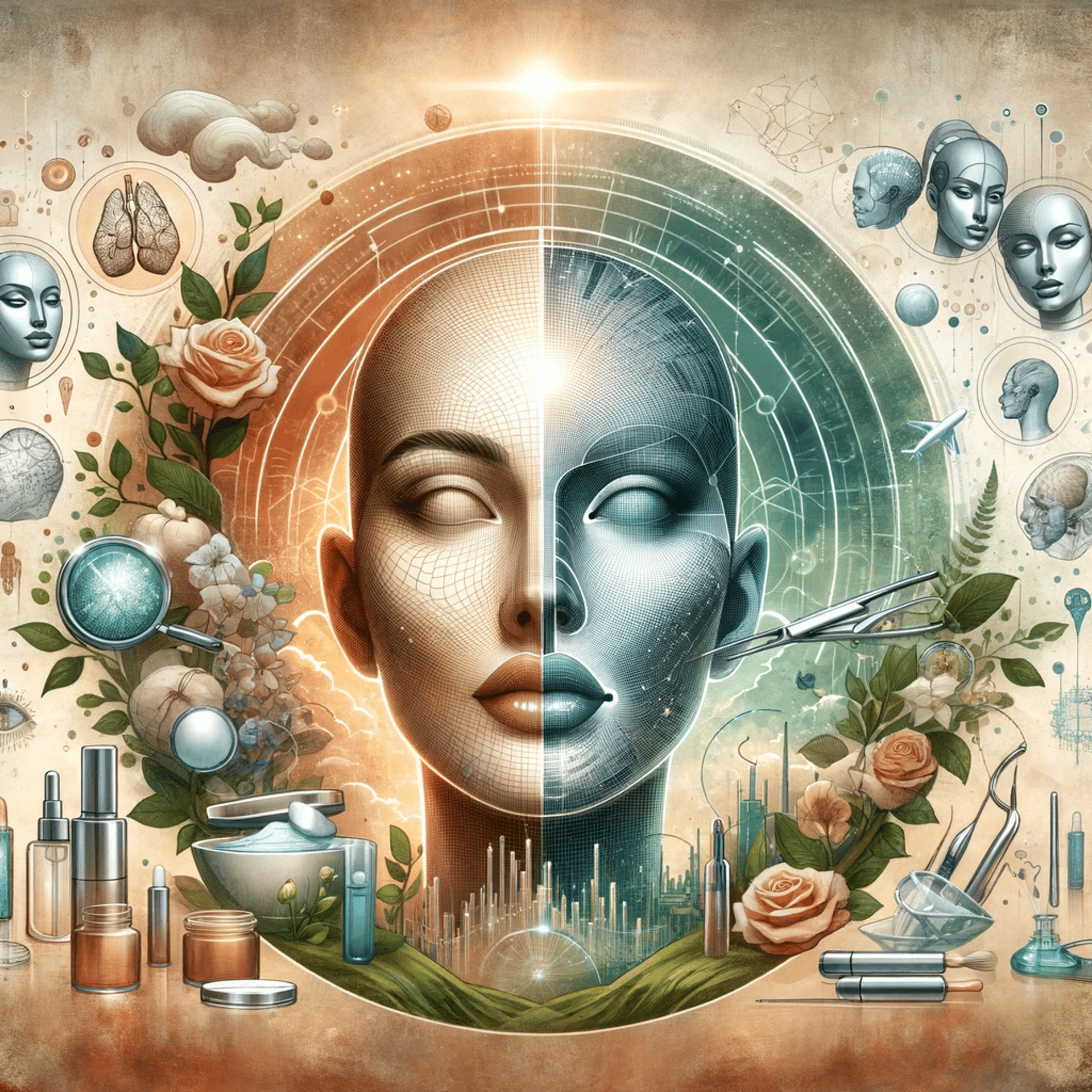
Exploring Sustainable Beauty, AI Dermatology, & Century-Long Rhinoplasty Trends
Explore 2023's beauty innovations: non-surgical rhinoplasty, sustainable products, AI in dermatology, 3D-printed skin, and nanotechnology.
BLOGTRENDS AND INNOVATIONS
Daniela Youroukova
9/12/20239 min read
Exploring the Impact of Sustainable Beauty Products, AI Advancements in Dermatology, and the Evolution of Non-Surgical Rhinoplasty Trends Over a Century. Over the last 100 years, arranged chronologically, along with interesting facts:
The evolution of the beauty industry over 100 years
1920s - Cold Cream: Cold cream, a popular cosmetic product, was used for makeup removal and moisturizing. It became a staple in many households during this era.
1930s - First Synthetic Dermal Fillers: Paraffin injections were introduced for facial contouring, but they had numerous complications, leading to their eventual discontinuation.
1940s - Topical Antibiotics: Antibiotic creams and ointments emerged for the treatment of skin infections and acne, greatly improving skin care.
1950s - Corticosteroid Creams: The development of corticosteroid creams revolutionized the treatment of inflammatory skin conditions such as eczema and psoriasis.
1960s - Chemical Peels Advancements: Chemical peels, using agents like glycolic acid, became more refined and effective for treating various skin issues.
1970s - Botox (Medical Use): Botox was first approved for medical use in treating muscle spasms. Its cosmetic application would come later.
1980s - Laser Hair Removal: The invention of laser hair removal technology marked a significant advance in permanent hair reduction.
1990s - Non-Surgical Skin Tightening: Ultrasound and radiofrequency devices were developed for non-surgical skin tightening and lifting.
2000s - Rise of Injectable Fillers: Hyaluronic acid fillers like Juvederm and Restylane gained popularity for wrinkle correction and lip augmentation.
2010s - Platelet-Rich Plasma (PRP): PRP therapy became popular for facial rejuvenation and hair loss treatment, utilizing the patient's own platelets.
2010s - Microblading: Microblading, a semi-permanent tattoo technique for eyebrows, became a beauty industry trend.
2010s - CoolSculpting: Non-invasive body contouring using controlled cooling was introduced, providing an alternative to liposuction.
2010s - Nanotechnology in Skincare: Nanoparticles were used in skincare products to enhance ingredient delivery and efficacy.
2020s - Virtual Consultations: Telemedicine and virtual consultations became prevalent, especially in the wake of the COVID-19 pandemic.
2020s - Personalized Skincare: Advancements in DNA testing and data analysis allowed for personalized skincare regimens tailored to an individual's genetics.
2020s - Non-Surgical Rhinoplasty: Dermal fillers gained popularity for reshaping and correcting imperfections in the nose without surgery.
2020s - Body Contouring Devices: Non-invasive body contouring treatments like SculpSure continued to evolve, offering targeted fat reduction without surgery.
2020s - 3D-Printed Skin: Scientists developed 3D-printed skin for grafting, reducing the need for traditional skin grafts.
2020s - AI in Dermatology: Artificial intelligence and machine learning were used to improve diagnosis and treatment recommendations in dermatology.
2020s - Sustainable Beauty Products: The beauty industry saw a growing focus on sustainability, with eco-friendly packaging and clean beauty products gaining popularity.
These trends and innovations have continually transformed the beauty, skin, aesthetic surgery, and dermatology industry over the last century, making it more accessible, less invasive, and more effective for individuals seeking to enhance their appearance and skin health. The industry continues to evolve, driven by advancements in technology and changing consumer preferences.
Introduction
In an era where technology intertwines with every aspect of our lives, the realms of beauty and healthcare are no exception. We are witnessing a revolution, one where non-surgical cosmetic procedures, eco-conscious beauty products, AI-powered dermatology, 3D skin technology, virtual consultations, and nanotech skincare are not just buzzwords, but realities transforming our approach to beauty and health. This article explores these innovative trends, offering insights into their impact, benefits, and potential future directions.
Introduction :A brief overview of how beauty and healthcare are evolving with technology
Section 1: The Rise of Non-Surgical Cosmetic Procedures
Section 2: Embracing Eco-Conscious and Sustainable Beauty
Section 3: AI-Powered Dermatology: A New Era in Skin Care
Section 4: 3D Skin Technology – Pioneering Skin Care Solutions
Section 5: The Transformation of Healthcare Through Virtual Consultations
Section 6: Nanotech Skincare: The Next Frontier in Beauty
Conclusion & Future Perspectives
Q&A
Content
The Popularity of Non-surgical Rhinoplasty
Gone are the days when altering one's physical appearance necessitated invasive surgeries. Today, non-surgical rhinoplasty, commonly referred to as a 'liquid nose job' or 'injectable nose job,' stands at the forefront of cosmetic procedures. This minimally invasive technique, utilizing dermal fillers, reshapes and contours the nose without the need for surgery. Its appeal lies in its simplicity, affordability, and minimal recovery time, attracting a broad demographic seeking cosmetic enhancements.
Benefits and Processes
Non-surgical rhinoplasty is celebrated for its ability to produce immediate results with little to no downtime. By using hyaluronic acid fillers, practitioners can smooth out nasal bumps, correct asymmetry, and refine the nasal tip, all within a short office visit. Patients can return to their daily activities almost immediately, a stark contrast to the extensive recovery associated with traditional rhinoplasty.
However, it's not just the convenience that's appealing. This non-invasive method also allows for a high degree of precision. Skilled practitioners can sculpt and contour the nose, ensuring results that align closely with patient expectations. Furthermore, the procedure is reversible; if the outcome isn't as desired, an enzyme can dissolve the filler, returning the nose to its original shape.
Risks and Considerations
While non-surgical rhinoplasty is generally safe, it's crucial to acknowledge the risks and considerations. Potential side effects include swelling, bruising, and asymmetry, though these are typically temporary. More serious complications, although rare, can occur if the procedure is not performed by a qualified professional. Therefore, choosing a skilled and experienced practitioner is vital for safety and satisfactory results.
The Rise of Non-Surgical Cosmetic Procedures
Embracing Eco-Conscious and Sustainable Beauty
The Shift Towards Green Beauty Products
In an increasingly eco-aware world, the beauty industry is undergoing a transformation. Consumers are now more inclined towards green beauty products, embracing eco-friendly skincare and sustainable makeup. This shift isn't just a trend; it's a movement towards responsible consumption. Brands are responding by developing products that not only promise beauty but also sustainability and ethical sourcing.
Sustainable Makeup and Organic Beauty
Sustainable makeup and organic beauty products are at the heart of this eco-conscious movement. These products are formulated with natural ingredients, devoid of harmful chemicals and synthetics. The packaging, often biodegradable or recyclable, further reflects the commitment to environmental responsibility. From zero-waste skincare to biodegradable beauty items, the options are expanding, offering consumers a guilt-free beauty experience.
AI-Powered Dermatology: A New Era in Skin Care
The Impact of AI in Skin Care
Artificial intelligence is revolutionizing dermatology, bringing forth a new era of skin care. AI-powered tools and applications are enabling more accurate skin analysis, diagnosis, and personalized treatment plans. This digital dermatology approach is particularly beneficial in identifying skin conditions early, allowing for prompt and effective intervention.
AI for Skin Analysis and Diagnosis
AI for skin analysis involves sophisticated algorithms that can evaluate skin images and identify various conditions, from acne to melanoma. By analyzing thousands of skin data points, AI can detect nuances and patterns that might be missed by the human eye. This technology not only aids dermatologists in diagnosis but also empowers individuals to take a proactive approach to their skin health.
3D Skin Technology – Pioneering Skin Care Solutions
Understanding 3D Bioprinting Skin
3D skin technology, specifically 3D bioprinting, is a groundbreaking advancement in the field of dermatology and cosmetic surgery. This technology involves creating layers of skin by precisely placing cells and biomaterials, essentially 'printing' skin in three dimensions. It has immense potential in treating burns, wounds, and scars, as well as in cosmetic applications.
Applications and Future Potential
The applications of 3D printed skin substitutes are vast. In the medical field, it offers hope for more effective treatment of severe skin injuries and conditions. For the cosmetic industry, it presents an opportunity to test products on bioengineered skin, reducing the need for animal testing. As the technology evolves, the potential for creating more complex skin structures, including hair follicles and sweat glands, becomes a possibility, opening new doors in both healthcare and beauty treatments.
The Transformation of Healthcare Through Virtual Consultations
The Role and Growth of Telehealth
The healthcare industry has been transformed by the advent of virtual consultations, accelerated by the global pandemic. Telehealth, which includes online medical consultations and virtual doctor visits, has become a vital part of healthcare delivery. It offers accessibility, convenience, and can often be a more cost-effective option for both patients and healthcare providers.
Benefits and Challenges of Online Medical Consultations
One of the primary benefits of virtual consultations is the ability to access medical care from anywhere, especially beneficial for those in remote or underserved areas. It also reduces the risk of contagion, a significant factor during the COVID-19 pandemic. However, challenges such as the need for reliable technology, potential limitations in physical examinations, and concerns about data privacy remain. Despite these challenges, the rise of e-health services and remote medical advice continues to reshape the healthcare landscape.
Nanotech Skincare: The Next Frontier in Beauty
Nanotechnology in Skin care
Nanotech skin care represents the fusion of skincare and advanced technology, where tiny particles deliver big results. Nanoparticles in skincare products allow for deeper penetration of active ingredients, enhancing efficacy. From nano-encapsulation in beauty products to nanoscale skincare formulations, this technology is setting new standards in personal care.
Innovations and Trends in Nanotech Skincare
Advanced nano skincare and nanocosmetics are not just about smaller particles but also about smarter delivery and increased effectiveness. Nano-enhanced beauty products can target specific skin issues more accurately, leading to better and faster results. As this field grows, it opens up a world of possibilities for personalized skincare solutions, tailored to individual needs and concerns.
Conclusions & Perspectives
Conclusion
The intersection of beauty and healthcare with technology is not just shaping current trends but is also paving the way for the future. From non-surgical cosmetic procedures and eco-conscious beauty products to AI-powered dermatology, 3D skin technology, virtual consultations, and nanotech skincare, each innovation brings us one step closer to a more efficient, ethical, and personalized approach to beauty and health.
The fusion of beauty and healthcare with technology is not just a passing trend; it's a paradigm shift. Each innovation, whether it's non-surgical cosmetic procedures, eco-conscious beauty products, AI in dermatology, 3D skin technology, virtual consultations, or nanotech skincare, is redefining our approach to beauty and health. These advancements offer a glimpse into a future where beauty and wellness are more accessible, personalized, and sustainable than ever before.
As we continue to explore these frontiers, the possibilities are as limitless as our imagination. The convergence of these fields promises not only enhanced aesthetics but also improved health outcomes, marking a new era in human well-being and beauty.
Future Perspectives
As we look forward, the convergence of these technologies promises even more personalized and effective solutions. The potential for further advancements is vast, with each step forward offering new possibilities for enhancing our health and beauty in ways we are just beginning to imagine.
As we venture deeper into the 21st century, the synergies between technology and the beauty-healthcare nexus are poised to evolve further. The future beckons with the promise of even more integrated and sophisticated solutions. Here's a glimpse into what lies ahead:
Personalization at the Core
In the world of beauty and healthcare, one size does not fit all. The future will likely see an increased emphasis on personalization, driven by technologies like AI and nanotech. Imagine skincare products tailored not just to your skin type, but to your unique genetic makeup, lifestyle, and environment.
The Integration of Virtual and Augmented Reality
Virtual and augmented reality could take virtual consultations to the next level. These technologies might allow for more immersive and interactive experiences, such as trying on makeup virtually or simulating the results of cosmetic procedures with precision.
Advanced Bioprinting
3D bioprinting holds the potential to revolutionize transplant medicine. In the future, it may be possible to print not just skin but entire organs, dramatically impacting both life-saving surgeries and cosmetic procedures.
Ethical and Sustainable Solutions
As the planet faces environmental challenges, the beauty and healthcare sectors will likely continue to champion sustainable and ethical practices. The focus will be on creating products and solutions that are not only effective but also kind to our planet.
Seamless Integration of Health and Beauty
The future might blur the lines between health and beauty even further. The integration of health monitoring devices into beauty products, such as skin patches that can track hydration levels or UV exposure, could become commonplace.
Q & A
Q1: What is non-surgical rhinoplasty and how is it different from traditional rhinoplasty?
A1: Non-surgical rhinoplasty, often referred to as a liquid or injectable nose job, involves reshaping the nose using dermal fillers instead of surgery. It's less invasive, has minimal downtime, and the results are temporary and reversible, unlike traditional surgical rhinoplasty.
Q2: How are eco-conscious and sustainable beauty products impacting the beauty industry?
A2: Eco-conscious and sustainable beauty products emphasize ethical sourcing, natural ingredients, and environmentally friendly packaging. This shift is transforming the beauty industry by promoting responsible consumption and reducing environmental impact.
Q3: What role does AI play in dermatology and skincare?
A3: AI in dermatology enhances skin analysis and diagnosis accuracy. It uses algorithms to evaluate skin images, identify various conditions, and support dermatologists in treatment planning, making skincare more personalized and efficient.
Q4: Can you explain what 3D skin technology is and its potential applications?
A4: 3D skin technology, particularly 3D bioprinting, involves creating synthetic skin layers using cells and biomaterials. Its applications range from treating burns and wounds to cosmetic testing, offering potential for more effective treatments and reducing animal testing.
Q5: What are the benefits and challenges of virtual consultations in healthcare?
A5: Virtual consultations offer accessibility and convenience, making healthcare more available, especially in remote areas. They also reduce contagion risks. However, challenges include the need for reliable technology, potential limitations in physical examinations, and data privacy concerns.
Q6: How is nanotechnology being utilized in skincare products? A6: Nanotechnology in skincare involves using nanoparticles to enhance the delivery and efficacy of active ingredients. Nanotech skincare products can penetrate deeper into the skin for more effective results, leading to innovations in personalized skincare solutions.
Q7: What future trends can we expect in the integration of technology with beauty and healthcare? A7: Future trends include increased personalization, the use of virtual and augmented reality, advanced 3D bioprinting, a focus on ethical and sustainable solutions, and the seamless integration of health monitoring into beauty products.
You may also like
For appointments, contact the clinic
©️ of Beauty fairy stories
Terms and conditions
Disclaimer: As an Amazon Associate, author, and affiliate on other networks, I may earn from qualifying purchases.