
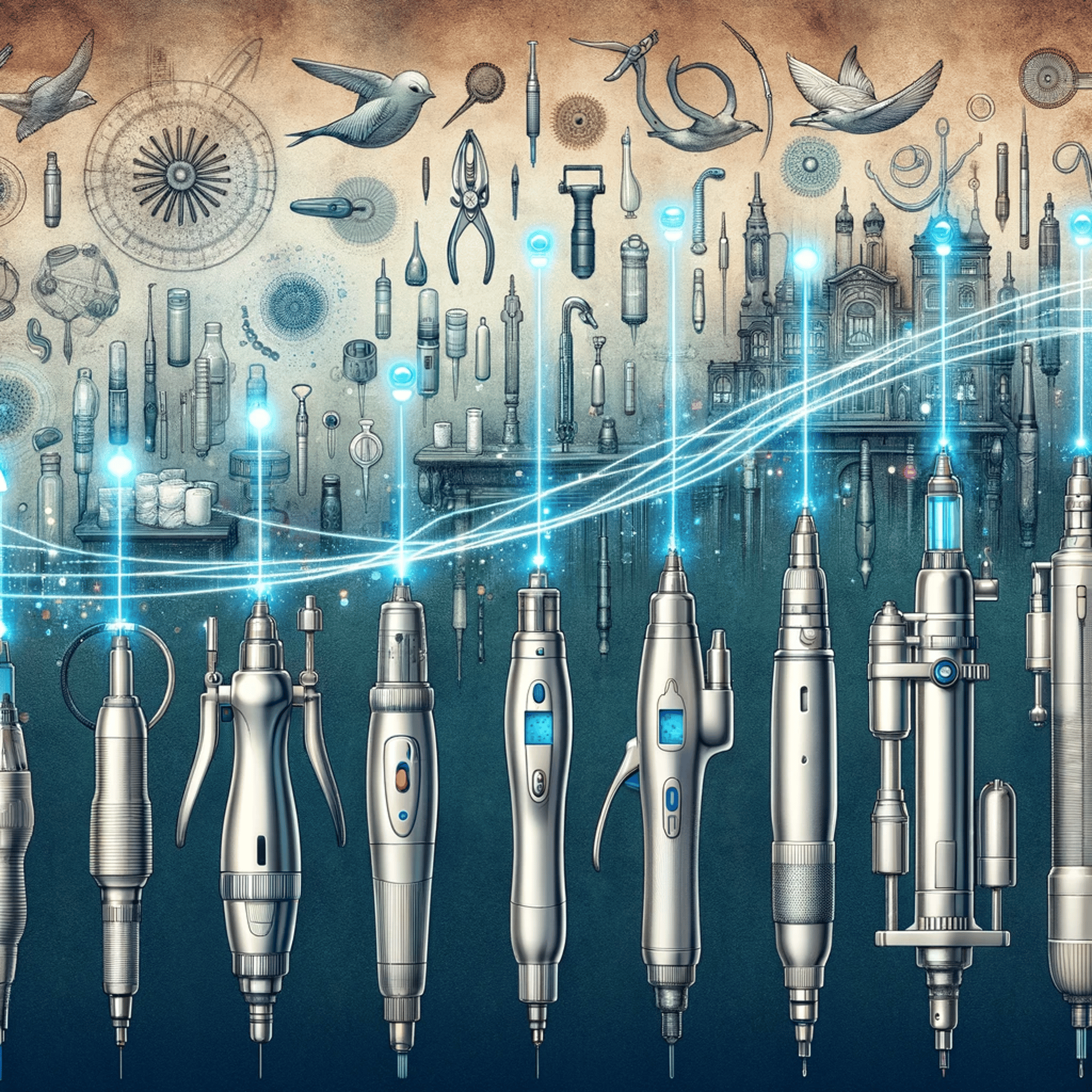
Mesotherapy Tools: Advancing Innovation & Evolution
Delve into the evolution of mesotherapy tools, tracing their journey from simple syringes to sophisticated devices like mesoguns, and examine their transform...
BLOGBEAUTY TOOLS AND DEVICESTRENDS AND INNOVATIONSDERMA
Daniela Youroukova
2/13/202411 min read
Mesotherapy, a groundbreaking technique in dermatology and cosmetic medicine, has evolved significantly since its inception. Originally developed in the 1950s by Dr. Michel Pistor, Mesotherapy began as a simple yet innovative approach to treating various skin and body conditions through the injection of substances directly into the mesoderm, the middle layer of the skin. This treatment method quickly garnered attention for its potential in cosmetic and therapeutic applications, leading to a surge in its popularity and adoption by medical professionals worldwide. However, the true transformation of Mesotherapy lies not just in its widespread use but in the evolution of the tools that make it possible. From the initial use of standard medical syringes and needles, the journey of Mesotherapy tools has been marked by continuous innovation and technological advancements. This article aims to explore this journey, shedding light on how these tools have developed over time and how they have revolutionized Mesotherapy practices. The significance of these advancements extends beyond mere technical improvements; they represent a paradigm shift in patient care and treatment efficacy. By enhancing precision, reducing discomfort, and offering more tailored treatment options, modern Mesotherapy tools have opened new horizons in dermatological care. This article delves into the rich history and current state of Mesotherapy tools, offering insights into how they continue to shape and redefine therapeutic practices in the field of dermatology.
Introduction
The evolution of Mesotherapy tools
Content
The Early Days of Mesotherapy Tools
Evolution and Advancements in Mesotherapy Tools
Modern Innovations and Practices in Mesotherapy
Comparative Analysis and Clinical Implications
Mesotherapy: Navigating the Future of Medical Innovation and Patient Care.
Interesting facts
Conclusion
FAQ Section
Resources and Further Reading
1
The Early Days of Mesotherapy Tools
The foundational phase of mesotherapy, spearheaded by Dr. Michel Pistor, marks a pivotal moment in the history of dermatological treatments. Dr. Pistor, a French doctor, conceptualized mesotherapy in the 1950s as a method to inject medications directly into the skin's mesoderm layer. This novel approach was initially aimed at treating vascular diseases and sports injuries, but it quickly found applications in cosmetic treatments due to its direct impact on the skin and subcutaneous tissues.
The early tools of mesotherapy were unassuming yet effective. Standard medical syringes and needles, which were readily available, became the primary instruments in this new treatment modality. These tools were not specifically designed for mesotherapy but were adapted for use due to their accessibility and familiarity with medical practitioners. The needles used were of standard sizes, similar to those used in general medical injections, while the syringes were typical of those found in any medical setting.
In these initial stages, the emphasis was placed more on the technique of the injections and the types of substances injected than on the tools themselves. Dr. Pistor's method involved injecting small amounts of medication multiple times over a targeted area, a technique that was innovative for its time. The idea was to treat the problem locally and limit systemic exposure to the drugs, thereby reducing potential side effects.
This period was characterized by a hands-on approach, relying heavily on the skill and precision of the practitioner. The tools were basic, but their effectiveness lay in how they were used. The success of these treatments hinged on the practitioner’s understanding of anatomy and the correct placement of the injections. It was a time when the art of the practice was as important as the science behind it.
2
Evolution and Advancements in Mesotherapy Tools
The 1960s and 1970s marked a significant turning point in the evolution of mesotherapy tools. As the technique gained wider recognition and acceptance in the medical community, there was an increasing demand for more specialized and sophisticated tools tailored to the unique requirements of mesotherapy. This period saw the transformation of mesotherapy from a niche treatment method to a more mainstream medical procedure, which spurred the need for tool innovation.
The development of specialized syringes and needles was a response to the growing need for precision and comfort in mesotherapy treatments. Unlike the standard needles previously used, these new needles were finer and shorter, designed specifically to target the mesoderm layer of the skin with minimal discomfort. The specialized syringes, on the other hand, were capable of delivering very small quantities of medication, allowing for more controlled and precise treatments.
These advancements represented a significant leap forward from the basic tools used by Dr. Pistor in the 1950s. This era also marked a shift in the focus towards enhancing patient comfort. The finer needles reduced the discomfort associated with multiple injections, a common component of mesotherapy treatments. This improvement was not only a technical achievement but also an important factor in patient satisfaction and the overall acceptance of mesotherapy as a viable treatment option.
Furthermore, these advancements in tool design also enhanced the precision of the treatments. The ability to accurately target specific areas of the skin without affecting surrounding tissues has become a critical aspect of mesotherapy, particularly in cosmetic applications where precision is paramount. The new tools allowed practitioners to offer more effective and targeted treatments, further establishing mesotherapy as a credible and effective medical procedure.
3
Modern Innovations and Practices in Mesotherapy
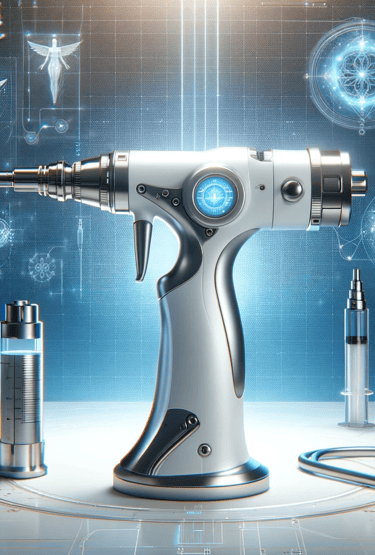
The landscape of mesotherapy underwent a revolutionary change with the introduction of the mesogun, a device symbolizing the apex of modern innovation in this field. This sophisticated tool has transformed mesotherapy from a purely manual technique to an automated, precise, and highly efficient treatment method. The Mesogun, equipped with advanced features, has become a cornerstone in contemporary Mesotherapy practices.
The Mesogun’s most significant contribution to Mesotherapy is its automation of the injection process. This automation allows for consistent and uniform delivery of the mesotherapy solutions, enhancing the efficacy of the treatment. Unlike manual injections, where the depth and amount of substance injected can vary, the Mesogun offers adjustable settings to control these variables precisely. This level of control is paramount, especially in cosmetic applications where uniformity and precision are crucial.
Another key innovation in modern mesotherapy tools is the integration of imaging technologies. Techniques like ultrasound imaging can now be used in conjunction with the mesogun to guide injections more accurately. This integration represents a significant leap forward, as it allows practitioners to visualize the subcutaneous layer of the skin, ensuring that the injections are delivered to the optimal depth and location.
These modern innovations in mesotherapy tools have also contributed to a higher degree of patient comfort. The automated nature of the Mesogun reduces the discomfort associated with multiple injections, making the treatment more acceptable to patients. Additionally, the precision afforded by these tools minimizes the risk of bruising and swelling, leading to a quicker recovery time and a better overall patient experience.
4
Comparative Analysis and Clinical Implications
In assessing the current landscape of mesotherapy tools, a SWOT (Strengths, Weaknesses, Opportunities, Threats) analysis provides a comprehensive overview. This analysis not only reveals the comparative advantages and limitations of tools like the Mesogun, derma rollers, derma stamps, derma pens, and thin needles but also sheds light on future directions and potential improvements in Mesotherapy.
The strengths of modern mesotherapy tools lie in their enhanced precision, efficiency, and patient comfort. Tools like the Mesogun and Derma pens offer high precision with adjustable settings, making them suitable for a wide range of treatments. On the other hand, weaknesses vary across tools, with some common issues being the cost of advanced equipment, the need for specialized training, and the potential for patient discomfort in certain scenarios.
The opportunities in the field of mesotherapy are vast, particularly with the ongoing technological advancements. There is a growing potential for more sophisticated tools that can further minimize patient discomfort and recovery time. In addition, the integration of digital technology offers prospects for more personalized and controlled treatments.
However, these advancements also bring forth threats, such as the challenge of keeping up with rapid technological changes and the increasing complexity of treatments, which might require more specialized training for practitioners. Additionally, there's the risk of market saturation with too many similar tools offering marginal improvements over each other.
When selecting mesotherapy tools for clinical use, several criteria are crucial. These include safety and comfort for the patient, effectiveness of the treatment, ease of use for the practitioner, and cost-effectiveness for the clinic. The future outlook of mesotherapy tools seems to be leaning towards more integrated, patient-friendly, and technologically advanced solutions, aiming to further refine the efficacy and safety of treatments.
Mesotherapy Tools:
How they are employed in Future of Medical Innovation and Patient Care
To understand the significance of these tools for patient care in the future, let's discuss how they are employed.
Mesotherapy is a minimally invasive procedure where a series of superfine injections of vitamins, enzymes, hormones, and plant extracts are delivered into the mesodermal layer of the skin. This infusion of savvy ingredients purportedly targets adipose fat cells, perhaps by inducing lipolysis, rupture, and death among adipocytes.

There are various uses for mesotherapy:
Fat Removal from the Stomach, Thighs, Buttocks, Hips, Legs, Arms, and Face: This treatment aims to reduce fat pockets in specific areas of the body.
Reduction of Cellulite: By targeting fat deposits, mesotherapy can smooth the skin's appearance.
Rejuvenation and Tightening of Skin: The treatment can improve the appearance of ageing skin.
Alopecia: Mesotherapy can also be used to promote hair regrowth in people suffering from alopecia.
It's important to note that while mesotherapy is used for these purposes, its effectiveness and safety can vary, and it's not universally recognized as a guaranteed treatment for these conditions. It's always recommended to consult with a healthcare professional or a dermatologist to understand the potential benefits and risks before undergoing mesotherapy like the Mesogun. Discussion on the advantages such as precision, patient comfort, and treatment efficacy.
Does mesotherapy come with any hazards or adverse effects? Information on potential risks and how modern tools have mitigated them.
Can Mesotherapy be used for all skin types and conditions? Insights into the versatility and adaptability of Mesotherapy for various skin types and conditions.
Resources and Further Reading
This part of the article will provide a curated list of resources for readers who wish to explore Mesotherapy and its tools in greater depth. This could include academic journals, and authoritative.


Interesting facts
Mesotherapy, with its intriguing and sometimes amusing aspects, offers some interesting facts that might tickle your fancy:
Origins in the Mid-20th Century: Mesotherapy was invented in 1952 by a French physician, Dr. Michel Pistor. It's fascinating to think about how a technique developed so long ago continues to be relevant and evolve in modern medicine.
It’s Not Just For Faces: Contrary to popular belief, mesotherapy can be used on various body areas, including the neck, hands, thighs, buttocks, and belly, especially in anti-cellulite treatment. This versatility makes it a unique treatment option in cosmetic medicine.
A Mix of Conventional and Unconventional: The word “mesotherapy” comes from the Greek words “meso” (meaning medium or middle) and “therapy” (meaning treatment). The term "meso" refers to the mesoderm, the middle layer of skin, where the treatment is applied.
The Misconception of Needleless Mesotherapy: Despite some beliefs, mesotherapy always involves a needle. The technique uses small, painless pricks to infuse biologically active substances directly into the dermis, enhancing the procedure's efficiency.
Multiple Sessions for Optimal Results: One might think a single session would be enough, but in reality, achieving desired outcomes from mesotherapy typically requires multiple meticulously timed sessions.
Temporary, Not Permanent Results: While the effects of mesotherapy can be quite impressive, they are not everlasting. Typically, results from a course of 4-6 sessions can last from 12 to 18 months, requiring continuous treatments for sustained effects.
More Than Just Skin Deep: Interestingly, mesotherapy isn’t just about injecting substances into the skin. It also involves stimulating the body's own healing and rejuvenation processes by acting on microcirculation, the immune system, and the neurovegetative system.
Sports Injuries and More: Historically, mesotherapy has been used in physiotherapy for treating sports-related injuries, particularly muscle-related ones. Its application has expanded to include various aesthetic and dermatological treatments.
Aesthetic Applications: In the realm of aesthetic medicine, mesotherapy is employed to combat skin ageing signs like wrinkles and flaccidity, and it's also known for improving skin hydration, turgor, and elasticity.
These facts about mesotherapy and its tools reflect the fascinating blend of historical roots and modern applications, making it a unique and versatile treatment in the medical and cosmetic fields.
FAQ
FAQ Section: All About Mesotherapy
What is mesotherapy, and how is it used in dermatology?
Mesotherapy is a minimally invasive procedure where a series of superfine injections of vitamins, enzymes, hormones, and plant extracts are administered into the mesodermal layer of the skin. This innovative treatment aims to rejuvenate and tighten the skin, as well as remove excess fat. In dermatology, it's celebrated for its versatility, being used for everything from promoting hair growth to reducing cellulite and fading wrinkles and lines. It's based on the principle that you can correct underlying issues like poor circulation and inflammation directly at the source, thereby improving skin condition and appearance.
How have mesotherapy tools evolved over the years?
From its inception in the 1950s by French doctor Michel Pistor, mesotherapy has seen a significant evolution in its tools and techniques. Initially, treatments were performed using manual multi-injection techniques, which, while effective, were time-consuming and somewhat uncomfortable for the patient. Over the years, advancements have been made to simplify the procedure and make it more comfortable. This includes the introduction of more sophisticated, precise, and less invasive devices, leading up to the modern mesogun, which allows for quicker and more efficient delivery of the mesotherapy solutions.
What are the benefits of modern mesotherapy tools like the Mesogun?
Modern mesotherapy tools, particularly the Mesogun, have transformed the mesotherapy experience for both practitioners and patients. These advanced tools offer unparalleled precision, ensuring that the therapeutic substances are delivered exactly where they're needed. For patients, this means less discomfort during treatment, shorter session times, and often, quicker visible results. The enhanced accuracy also contributes to the overall efficacy of the treatment, optimizing the outcomes for conditions like skin rejuvenation, fat reduction, and cellulite smoothing.
Does mesotherapy come with any hazards or adverse effects?
Like any medical procedure, mesotherapy does come with its set of potential hazards and adverse effects, including the risk of infection, bruising, swelling, and allergic reaction to the injected mixtures. However, with the advent of modern technologies and improved practices, these risks have been significantly minimized. Today's mesotherapy devices, when used by trained and experienced practitioners, ensure a cleaner, safer, and more controlled application, reducing the likelihood of complications.
Can mesotherapy be used for all skin types and conditions?
Mesotherapy is praised for its adaptability and versatility, making it suitable for a wide range of skin types and conditions. However, the treatment must be tailored to each individual's specific needs and skin concerns. While mesotherapy can address issues like aging skin, hair loss, and localized fat deposits across diverse skin types, the choice of substances injected and the treatment protocol may vary. It's essential to consult with a dermatology specialist who can assess your skin's condition and recommend a personalized treatment plan.
In conclusion, mesotherapy offers a promising option for those looking to tackle various skin concerns and conditions, thanks to its evolving tools and techniques that enhance precision, comfort, and efficacy. Like any treatment, it's important to seek advice from a qualified professional to ensure it's the right choice for your skin type and goals.
Resources and Further Reading
"Illustrated Atlas of Esthetic Mesotherapy" by Gerhard Sattler and Britta Knoll. This book appears to be a comprehensive resource on esthetic mesotherapy, including detailed information and illustrations that may cover aspects of its evolution and practical application"Illustrated Atlas of Esthetic Mesotherapy"
Conclusion
In summary, the evolution of tools in Mesotherapy from Dr. Pistor's basic syringes to today's advanced Mesoguns and precision instruments marks a significant advancement in dermatological and cosmetic treatments. These developments reflect a broader trend towards more patient-centric, efficient, and precise medical procedures. The future of Mesotherapy, buoyed by technological innovation and clinical research, holds promise for even more effective and patient-friendly treatment modalities. This journey from tradition to innovation not only enhances the efficacy of Mesotherapy but also embodies the dynamic nature of medical technology and its role in improving patient care.
You may also like
For appointments, contact the clinic
©️ of Beauty fairy stories
Terms and conditions
Disclaimer: As an Amazon Associate, author, and affiliate on other networks, I may earn from qualifying purchases.